
Description
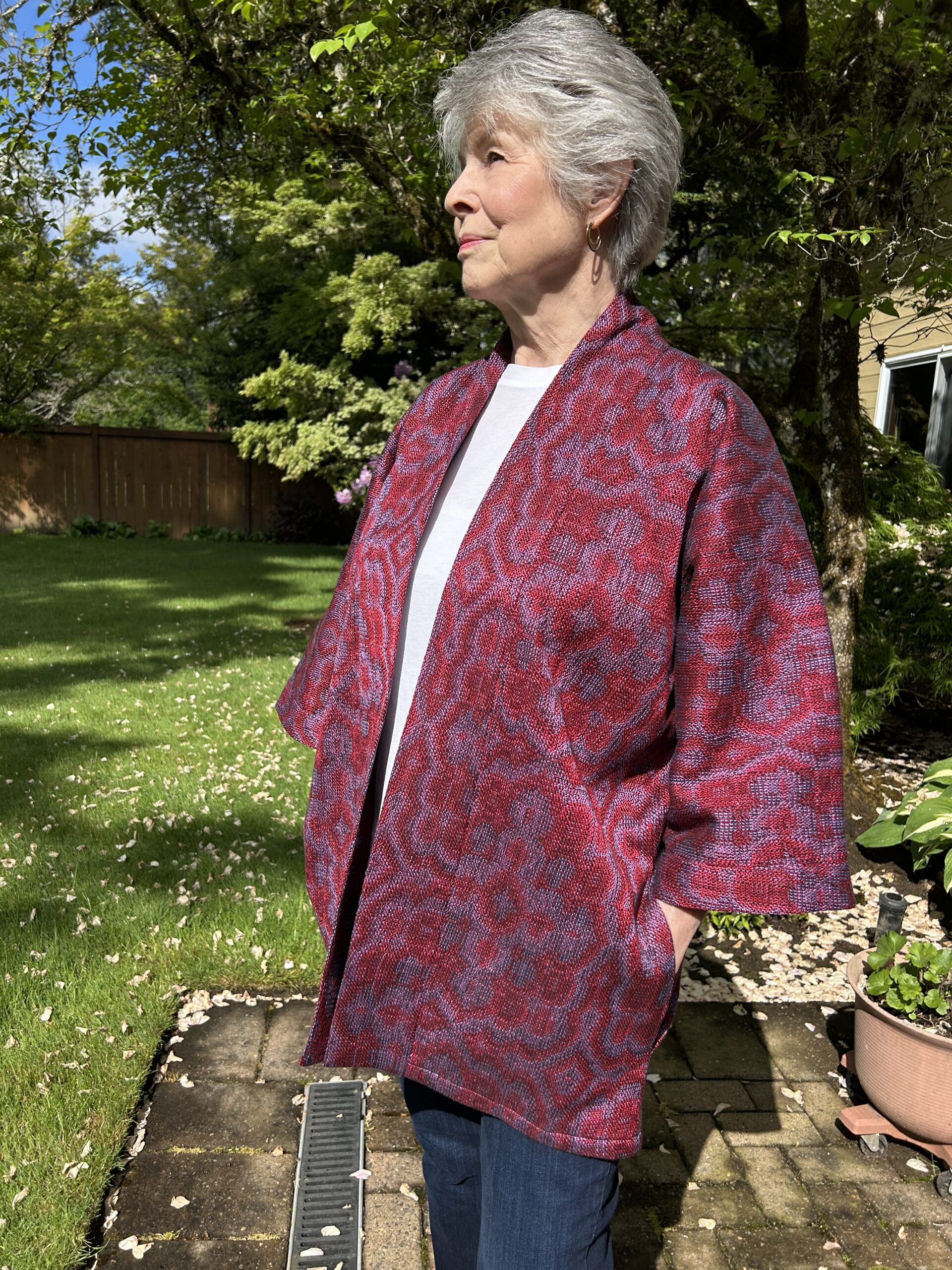
The hapi coat. A hapi is a traditional Japanese shop coat assembled from rectangular pieces of cloth. Its utilitarian style protects the clothing beneath, provides extra warmth, and frees the hands and wrists for working. Traditionally, a long fabric belt is wrapped around the hapi to keep it close to the body. Hapi have become popular in the West, along with adaptations of kimono and other traditional Japanese styles, where we often wear them unbelted. Made with washable fabrics, they are easy toppers for every day. Made with luxurious fabrics, they are favored for special occasions.
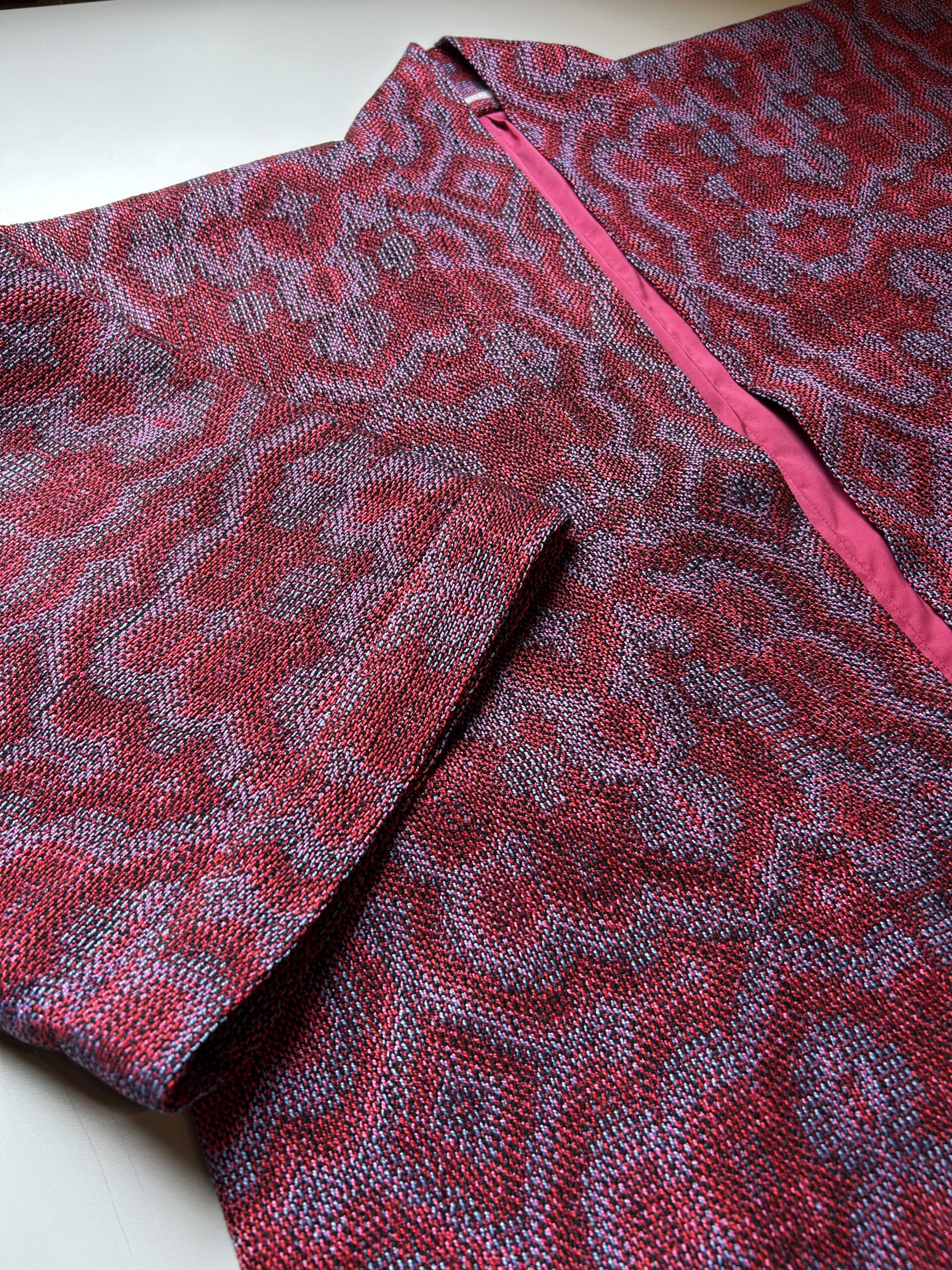
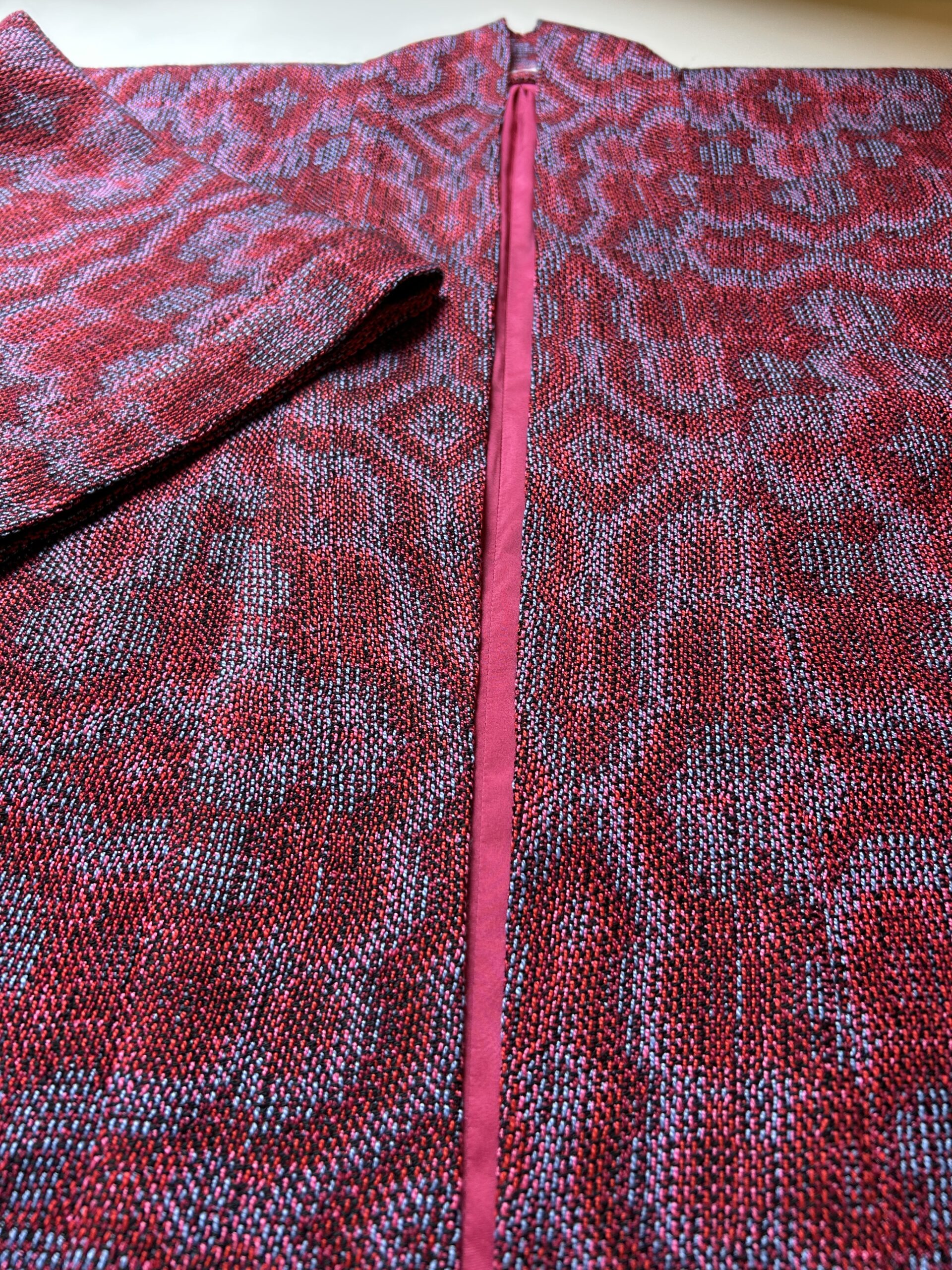
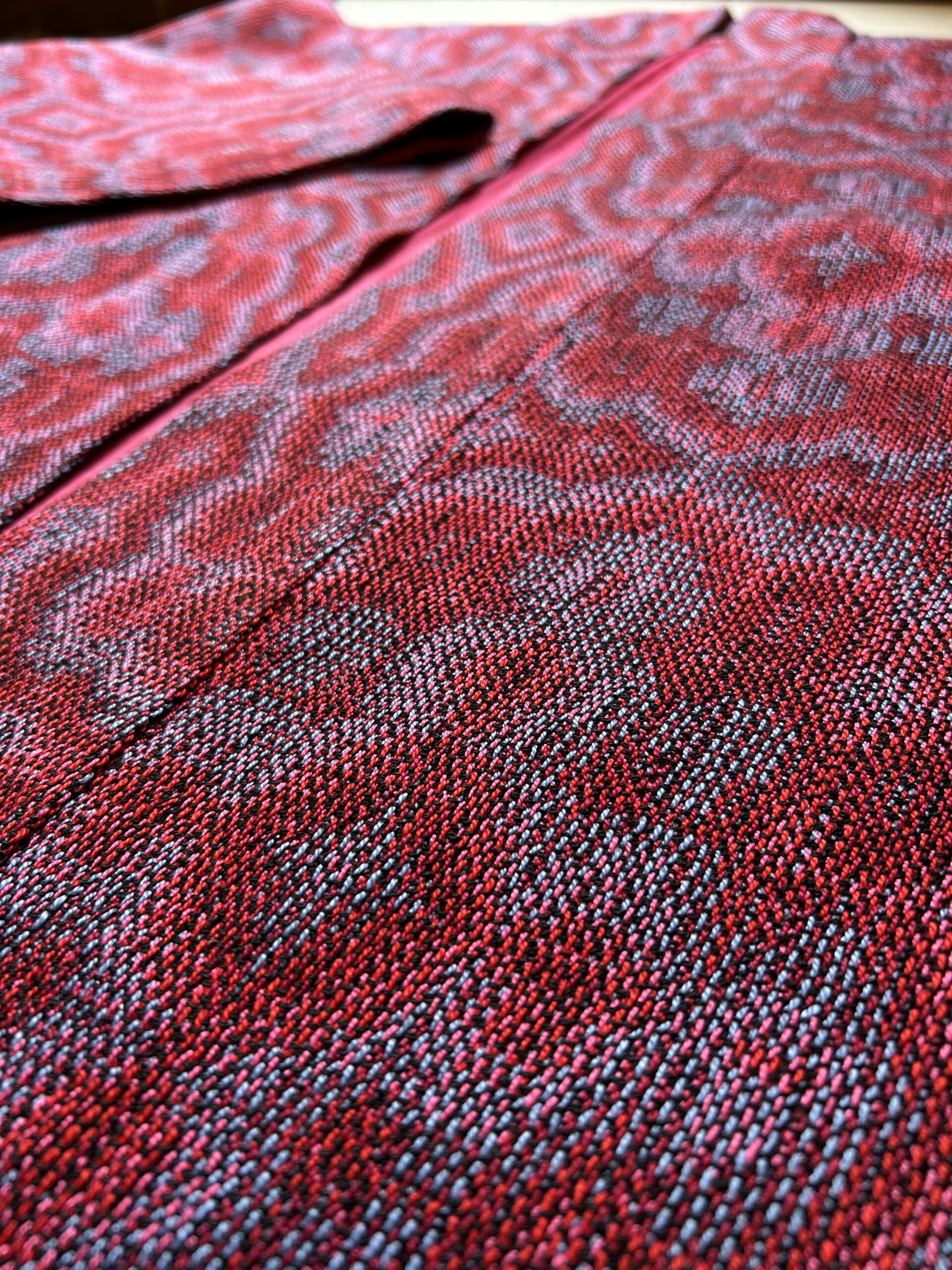
How the fabric was made. The warp (vertical threads) is cotton; the weft (horizontal threads) is a rayon fiber called Bambu. The structure is four-color echo weave. Colored threads in a sequence of four are repeated in the warp for the width of the cloth. The black weft enhances the warp colors. The “echo” in the weave is achieved by the manner of threading the heddles in combination with the repetition of the treadling sequence. An iridescent effect occurs because of the strict repetition of the colors. The scheme I used in the warp combined three analogous colors and one contrasting color. In the blue hapi the analogous colors are turquoise, blue, and blue-violet. The contrasting color is gold. Because gold is opposite purple on the color chart and very light, the contrast in this fabric is pronounced. In the red hapi I used red-orange, pure red, and pink in contrast to light blue. This combination tricks the eye to see a violet hue in the cloth.


